

In the northernmost part of the Northwest Territories, the Beaufort Delta is home to about 6,800 people, most of whom live in Inuvialuit and Gwich’in communities that are spread out over the region’s river delta, tundra, and seashores. In recent months, the federal government has announced plans to make investments in the region, such as defence infrastructure, electricity capacity, and transportation networks. With the proper community consultations, these investments could lead to lasting changes in the region, including the potential to lower food prices. Groceries in the North can cost double or triple their price in the rest of Canada.
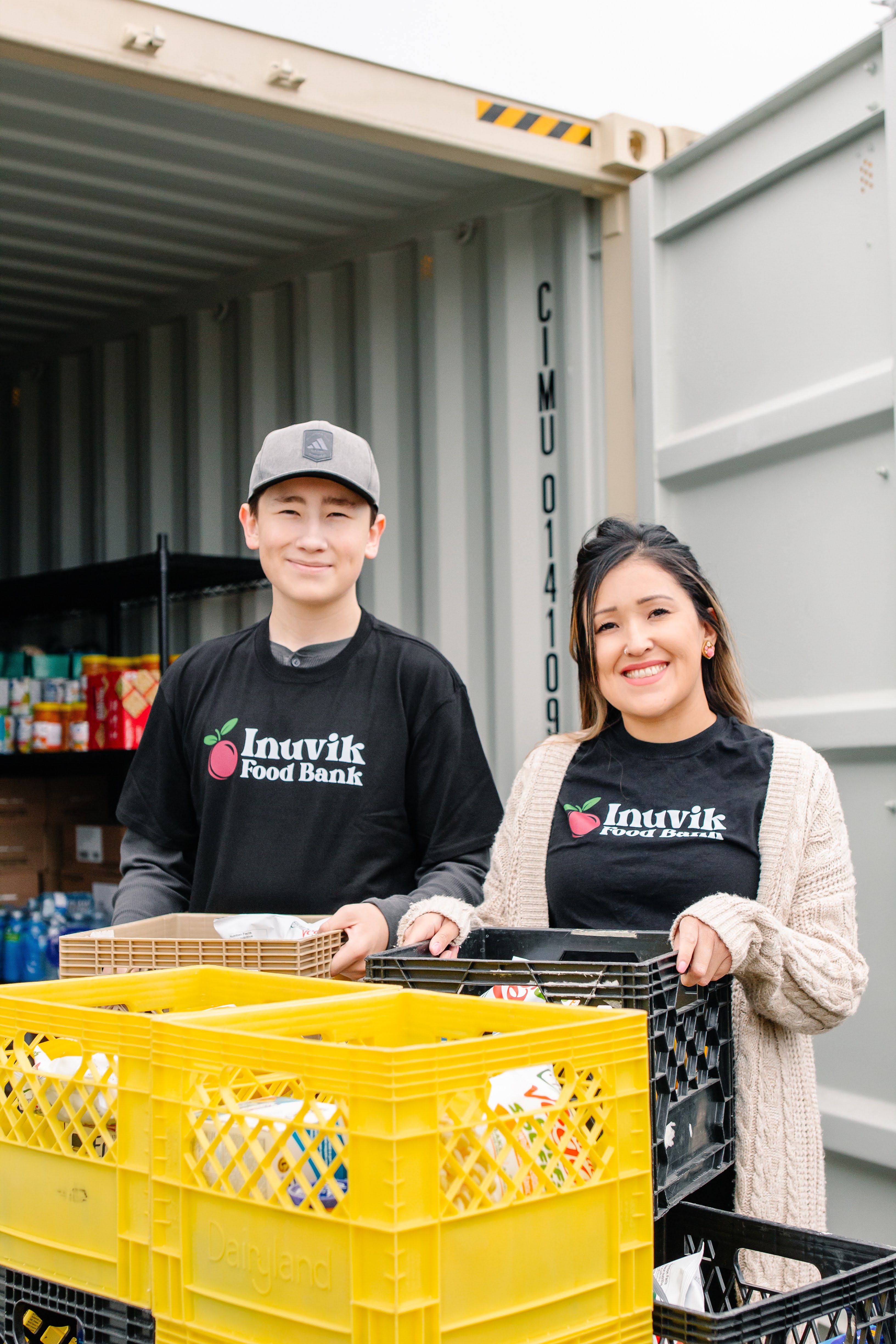
Although these investments may hold promise for the future, hunger remains a significant challenge in the Beaufort Delta right now. Fortunately, local “food champions” are leading efforts to improve food access in the region. For instance, the region’s largest town, Inuvik, has a food bank that aims to provide food hampers for families in need. Recently, it acquired fridges, freezers, two shipping containers, and a van with help from Food Banks Canada and the generous partners that contribute to its Food Bank Support and Enhancement Program.
Due to the limited number of buildings in many Northern communities, shipping containers are often among the most affordable ways to create spaces that are food-safe and protected from the elements. The Inuvik Food Bank’s newly expanded storage and refrigeration capacity has greatly boosted the amount of perishable food it can handle. Now that it can buy this food in bulk, the organization saves money on each order. Furthermore, it no longer has to turn away fresh donations or scramble to distribute them before they spoil.
“The addition of the van has been equally impactful,” wrote food bank manager Laska Nerysoo in a report to Food Banks Canada. “Reliable transportation has improved our ability to pick up food and bring it directly to community members who need it most, including those with limited mobility.”
“The impact was clear right away,” she added. “Recently, we were able to prepare and deliver food hampers to Elders in our community, many of whom have limited access to transportation.” Some of the Elders even accepted a ride to their day program in the same van.
“Overall,” Nerysoo concluded, “this investment has allowed us to accept more perishable food, improve food-recovery efforts, ensure that more people receive healthy food, and better serve our community.”
Leaving Transportation Challenges in the Rearview Mirror
Across the country, few food banks would turn down the opportunity to add a van or truck to their fleet. Whether for picking up surplus food donations from businesses and farms, buying food, bringing food to outlying communities, delivering food to clients who can’t make it to the food bank in person, or sharing food across the food bank network, reliable transportation is essential to their work. So when longtime partner Purolator was preparing to retire eight of its fuel-powered trucks and replace them with electric vehicles in late 2025, Food Banks Canada staffers were pleased to connect the company with eight food banks that had previously expressed a need for better transportation capacity.
“Thank you so much for making this happen,” wrote Moose Jaw & District Food Bank in Alberta. “We’re beyond grateful for Purolator’s incredible generosity. This refurbished truck truly couldn’t have come at a better time. Our old van is on its last legs and was about to need some major, and costly, repairs just to keep it running.”
Instead of paying for those repairs, the food bank got to put more of its limited funds toward buying food to help bridge the gap between the donations they were receiving and the needs in Moose Jaw. “This donation will make a huge impact on our day-to-day work and the families who count on us,” they said.
In 2026, Purolator introduced a new application process to identify food banks in need of transportation support and donated an additional 14 retired trucks. The organization intends to continue this initiative as more vehicles become available. So far, Purolator has provided a total of more than 30 trucks to the food bank network.
The trucks are just one part of the longstanding Purolator Tackle Hunger program. Through initiatives such as the Purolator Tackle Hunger National Red Bag food drive, in-kind transportation services and other fundraising efforts, Purolator’s employees, customers and partners are on track to deliver more than 2.5 million meals to food banks this year. That support extends to communities across the country, including in the North and other underserved areas through financial investments in FBC’s Food Bank Network Support and Enhancement Program.

“Transportation is one of the most significant challenges for food banks, particularly in remote communities,” says Food Banks Canada’s CEO, Kirstin Beardsley. “We’re grateful to Purolator for leveraging its equipment, its services, its resources, and its wonderful people to help food banks support communities from coast to coast to coast.”