

Never before in recorded history have so many people in Canada experienced food insecurity, and keeping up with this need is among the greatest challenges facing food banks across the country. They now see over 2.2 million visits every month. That’s more than 26 million annual interactions with people seeking food support.
Even though everyone — food bankers most of all — wants to see less need for food banks, nobody facing hunger should ever have to face empty shelves after mustering the courage to ask for help.
However, many food banks are stretched to their limits: 51% report being forced to give each visitor less food than usual because they were running short, while 21% report having recently run out of food before meeting demand.
Food Banks Canada is tackling this urgent challenge, working with food bankers, donors and partners to:
- Increase the amount of food available to Canada’s food bank network
- Improve the consistency and reliability of the food supply in every community served by that network — even as it continues expanding into more communities!
Here are some facts about the scope, size and nature of that work that you may find remarkable:
1. Food banks are one of Canada’s largest food-distribution networks
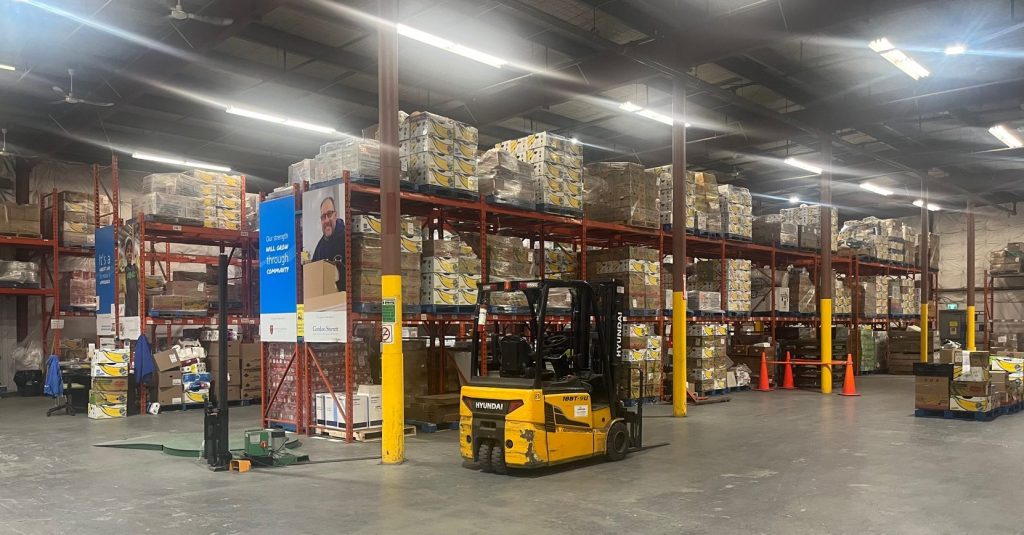
The food bank network currently has about 5,500 distribution points: more than Canada’s four largest food retailers combined. Beyond these regular sites, Food Banks Canada can get food to any community anywhere within our borders if there’s an emergency request.
When it comes to acquiring food, the canned goods collected at local food drives tell only a small part of the story. As important and appreciated as food donations from everyday people are, they unfortunately wouldn’t be enough, on their own, to meet Canada’s needs in 2026.
To help increase the overall volume of food, Food Banks Canada acquires large-scale donations: think tens of thousands of jars of peanut butter or just as many potatoes. Last fiscal year, for instance, through national partnerships and recovery programs, it helped food banks to recover 22 million pounds of food from retail stores, 5.5 million pounds from farms and 9.5 million pounds from other stages of the supply chain, such as manufacturers and wholesalers. It also distributed 215,000 food packs for children in need and facilitated the purchase of $22.4 million of discounted food for food banks.
And that’s just the food that’s acquired at the national level: provincial food banking associations also source food, as do local food banks and community organizations. Altogether, more than 340 million pounds of food were distributed by Canada’s food bank network in 2025. That would have been roughly enough to provide eight meals to every last person in Canada! (In practice, of course, not everyone used a food bank.)
Ensuring that food moves smoothly through the food bank network is a complex undertaking that calls for resources such as cold-chain infrastructure (the ability to keep perishable food at safe temperatures while in transit or storage); regional hubs where food can be received, divided, and repacked; and plenty of coordination.
In June of 2025, for example, a shipment of food was needed in Clyde River on Baffin Island in Nunavut. The closest staging point for air cargo is some 2,800 kilometres south of Clyde River in Ottawa, so Food Banks Canada sent food products to the Ottawa Food Bank, which supplemented them and loaded them onto pallets for shipment. After arranging for truck transport from the food bank to the airport, Food Banks Canada coordinated with both the air cargo carrier and the municipality of Clyde River, to ensure people were prepared to receive and transport the food when it landed.
“When logistics works well, it transforms generosity into impact,” says Franciska Riehl, a distribution and logistics officer at Food Banks Canada. “Whether we’re moving dry goods, fresh produce, or something more specialized, cross‑country transport can involve transport truck and rail delays, weather disruptions, wildfires, or the challenge of reaching remote and Northern communities, among other things. Despite the complexity, the goal is always the same: to keep food moving to where it’s needed most.”
2. The food bank network does food processing

There’s enough food in Canada for everyone, but unfortunately, it’s not always in the right places or formats. For instance, a lot of high-quality surplus food is available from farms, but much of it is lost due to logistical challenges, especially given the rural locations of farms and the short shelf life of fresh produce. That reality is changing as Food Banks Canada and the food bank network invest in the capacity to turn surplus from primary producers into formats that can more easily get shipped and shared around.
For instance, Moisson Montréal, a regional distribution hub for food banks, has a semi-automated fruit and vegetable bagging line that can bag up to 1,000 kilos of fresh or frozen food per hour. They also have an innovative partnership with Les Fermes PB, a meat-processing business that turns its deli-meat trimmings into a tasty and shelf-stable meat spread for Moisson Montréal’s network of over 300 nonprofit organizations.
At Greener Village, a Fredericton-based food bank, the new Thrive Food Rescue Centre is set to receive large amounts of surplus produce that would otherwise go to waste. The facility will make this produce “food-bank-ready” through processes such as washing, bagging, peeling, or flash-freezing.
Harvest Manitoba, a provincial food bank association headquartered in Winnipeg, is developing
a similar project that will also dramatically expand the food bank network’s ability to recover and process fresh food.
3. Food banks commonly pay for food
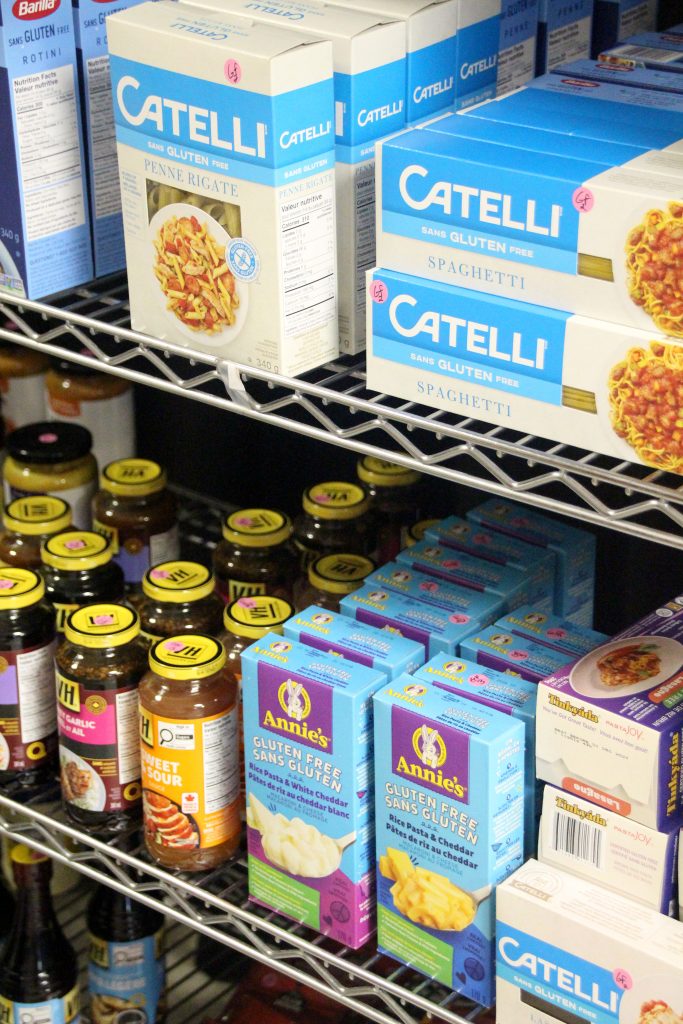
Food banks wouldn’t be able to operate without generous food donors, but the reality these days is that most don’t rely on donations alone. A Food Banks Canada survey reveals that 95% of food banks had to purchase food in 2025, spending a median of $70,000 on it. Our conservative estimate is that collectively, they spend at least $300 million on food annually.
Sometimes, food bankers make these purchases simply to have enough food overall. Other times, they’re after specific types of food that are not commonly donated. These can include options for people with special medical needs, such as diabetes, or foods that people with specific cultural backgrounds find meaningful and know how to prepare. Other times, food banks are aiming for a balanced mix of food groups or trying to offer a consistent supply of basic, high-demand staples.
Food Banks Canada helps food banks stretch their budgets by negotiating exclusive prices (typically 25 to 50% off) from reputable vendors and providing a centralized platform called Marketplace that houses information about those vendors and their products, allowing food banks to shop efficiently with preferred pricing. Our logistics partners also support this program, by helping to deliver the products seamlessly to food banks’ doors.
“This means that all funds raised here in our community can go further,” reports Saskatoon Food Bank and Learning Centre, about ordering from one of the Marketplace vendors. “Getting foods that are nutritious and on our most-wanted list has ensured we can provide a standard hamper to families who are forced to turn to our food bank. Families need versatile, nutrient-dense food, and [these] products have ensured we can provide them.”
Food Banks Canada is also developing opportunities to use group buying to unlock additional discounts for food banks going forward.
4. The entire endeavour is held together by relationships
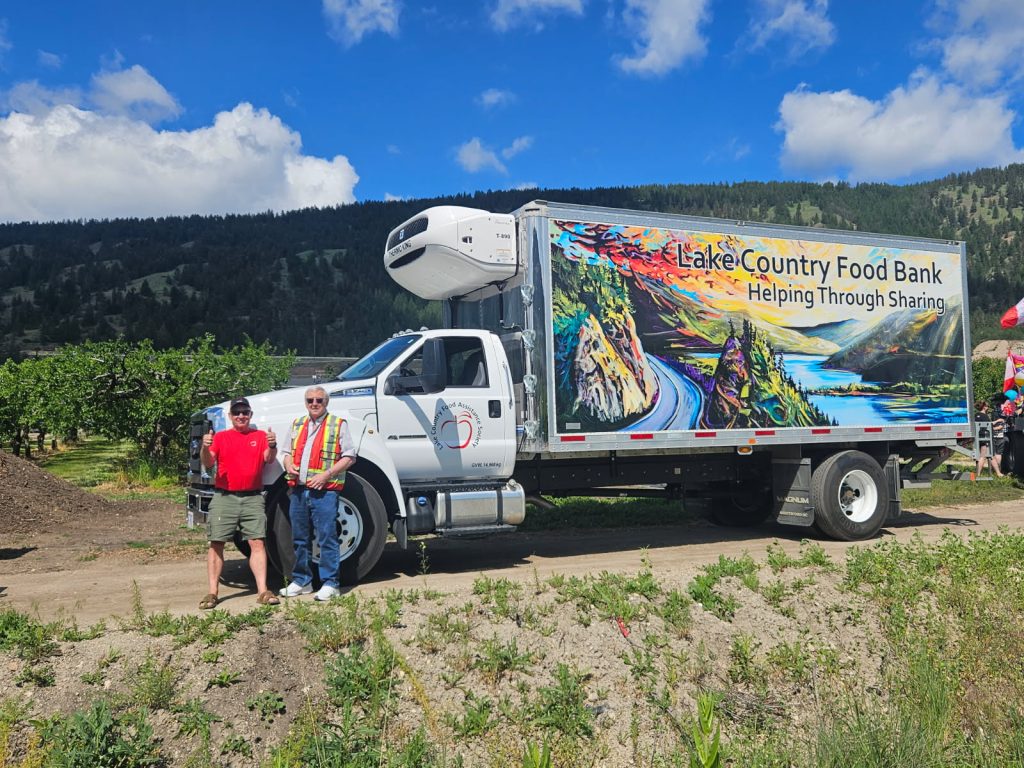
One of the facts that makes food banking special is that it wouldn’t be possible without human generosity. People, businesses, and organizations all across the country provide funds, products, services, time, infrastructure access, and expertise to help make sufficient food available to everyone, not just those who can afford to buy it at any given time.
Building and maintaining the links between the various contributors is work in its own right. It can involve making introductions, coordinating, reporting, recognition, addressing challenges and concerns, and helping everyone involved see the value and impact of their contribution.
“What makes these [food-volume] numbers stand out to me is that none of this happens in isolation,” says Franciska Riehl. “Every pound of food moved reflects the efforts of countless people: food donors, financial donors, transportation partners, provincial food banking associations, my Food Banks Canada colleagues, food bank distribution hubs, and of course, food banks themselves.”